Tourism Ireland is highlighting three anniversaries, milestones and commemorative happenings across the island of Ireland in 2026
Giant’s Causeway
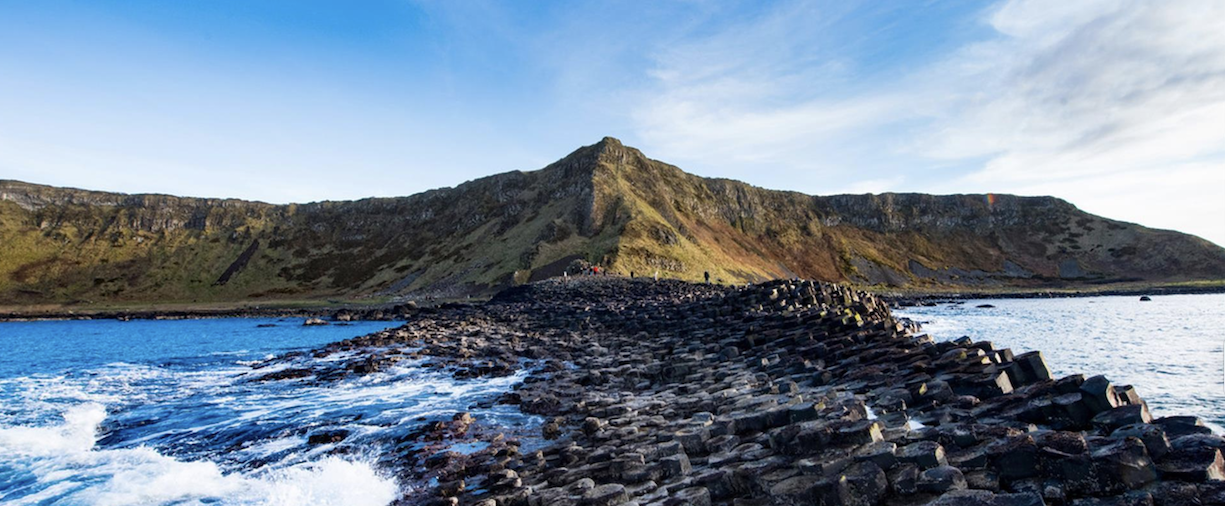
Giant’s Causeway will mark its 40-year anniversary as UNESCO World Heritage Site. This natural wonder located the Causeway Coastal Route in County Antrim, Northern Ireland, near the town of Bushmills. It is composed of approximately 40,000 interlocking basalt columns that step down
from the cliff foot and disappear under the sea. Most of the columns are distinctively hexagonal (six sided), though some have four, five, seven, or eight sides, fitting together like a giant, natural paved road.
The Causeway was created by an ancient volcanic fissure eruption about 50 to 60 million years ago during the Paleogene period. As the molten basalt lava cooled rapidly upon contact with the sea, it contracted and fractured into these unique columnar shapes.
The National Trust UNESCO World Heritage Site, which is also an Area of Outstanding Natural Beauty, is open year- round seabird spotting and walking trails suitable for all ages. Seasonal events including dark-sky walks, available year-round.
www.nationaltrust.org.uk/visit/northern-ireland/giants-causeway
The Gaeltacht
Ireland’s Irish speaking areas, the Gaeltacht, were founded 1926, which is 100 years on from the original Gaelic Revival. It is also 150 years since the Society for the Preservation of the Irish Language was founded. To experience the language spoken first hand, visitors can explore rural Gaeltacht regions and participate in Irish language courses, or explore Belfast’s Cultúrlann
McAdam Ó Fiaich (Irish Cultural Centre). There are also tthriving Gaelscoils (Irish schools) and cultural hubs, to festivals and fashion embracing Gaeilge, the language is experiencing its contemporary revival.
www.oideas-gael.com
Giants Causeway Gulliver’s Travels
Jonathan Swift’s Gulliver’s Travels was first published 300 years ago in 1726 since. Swift was born in Dublin in 1667 and resided in Trim, Co Meath for much of his writing career. It’s said Swift named the land of Lilliput after its namesake in Co.`Westmeath and took inspiration for the giant in the novel from ‘Napoleon’s Nose’ in Cavehill Mountain, overlooking Belfast.Visitors can see a first edition of the book at Armagh Robinson Library, with celebrations including exhibitions at Marsh’s Library and St Patrick’s Cathedral in Dublin, where Swift served as Dean.
www.marshlibrary.ie/gullivers-afterlives